
The Vishnu Purana, notes A K Bhatacharya, ends on a sombre note, but not without offering the hope that those who chant Vishnu's name can still reclaim dharma.

Never before has the need for creating an ambience for economic policy reforms been as critical as it is now, points out A K Bhattacharya.

The dividends for the economy from such a rapid rise in capital expenditure would be huge, observes A K Bhattacharya.

But it would be unwise on the government's part not to heed the suggestions made by the experts group, set up by the Supreme Court, in particular the one on involving the states and giving them the flexibility in designing and implementing the farm laws, observes A K Bhattacharya.

Budget for 2022-2023 has returned to its agenda for protectionism in the name of creating a self-reliant India, points out A K Bhattacharya.
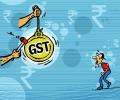
The broad trends of GST collections will make you wonder if indeed the biggest indirect tax reform in the country has led to a real improvement in revenues, notes A K Bhattacharya.

The challenges before the coming Budget are more daunting than those in 2021, reveals A K Bhattacharya.

If the Centre and states are keen on spending more to meet the COVID-19 challenges in the coming year, they must bear in mind the need to raise more resources through taxes and non-tax revenues, suggests A K Bhattacharya.

The finance minister could well be on her way to setting a record of achieving the biggest single-year reduction in the government's fiscal deficit, explains A K Bhattacharya.

The Centre's retreat from the farm laws is likely to have a significant bearing on the fate of laws that the Centre has made, for instance, in labour and electricity, predicts A K Bhattacharya.

There is no reason for keeping an entire ministry with a total staff strength of 2,300, just for the oversight of a few aviation sector laws and regulatory bodies, notes A K Bhattacharya.

The government must send out a clear signal that leadership positions at regulatory bodies are not a preserve of retired government officials, argues A K Bhattacharya.

This may lead to the states' combined fiscal deficit to widen much faster, while the Centre may show a smaller or insignificant slippage in meeting its deficit target. The Centre will celebrate over its fiscal prudence, but the states would suffer, A K Bhattacharya points out.

Given the many policy areas where the Centre and the states have not been seeing eye to eye in the last few years, it is time the Modi government convenes a meeting of the Inter-State Council, recommends A K Bhattacharya.
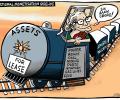
But use of that word -- privatisation -- is not encouraged. This seems to be a classic case of reforms through subtle signals, observes A K Bhattacharya.

Till such time that a new governance framework comes into being, the progress of reforms in health, education, land, labour, electricity and agriculture could remain fraught with problems, agitations and delays, observes A K Bhattacharya.
The preliminary processing of tax returns is already undertaken with the help of technology. There is now greater scope of using more technology to reduce the human interface even further, notes A K Bhattacharya.
Strengthening the portfolios of the home minister and the finance minister is a message that should not be missed, points out A K Bhattacharya.

But their trajectory and direction have been largely influenced by politics and the political leadership's understanding of how the economy needs to be managed, explains A K Bhattacharya.

Before 2019, an estimated 22 million individual income-tax returns did not have to pay any taxes. But after the change in the exemption level, another 13 million individual tax returns did not require to pay taxes. Thus, of about 58 million returns, as much as 63 per cent or 35 million went out of the direct tax net, A K Bhattacharya points out.
